Bone marrow puncture procedure opens up new opportunities for early phase immuno-oncology trials
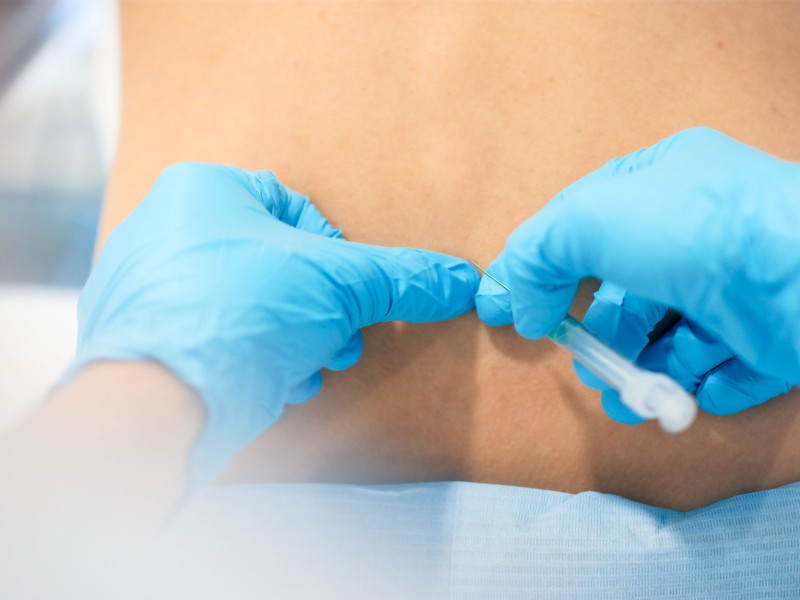
CHDR now offers an in-house procedure for bone marrow sampling in early phase clinical trials, expanding the possibilities for a wide range of therapeutic areas, particularly immuno-oncology. The newly implemented procedure was validated in a study performed in 2022, which showed that healthy volunteers tolerated the procedure well and most would be willing to undergo it again as part of a future study.
In recent years, the field of oncology has seen a growing interest in immunomodulatory drugs. For the clinical development of these drugs, it is important to study immune cells in different immunological compartments. CHDR already has broad experience researching immune cells in skin and peripheral blood, whether in vitro, ex vivo or in vivo. Now a central compartment has been added: bone marrow.
Dr Jacobus (Co) Bosch, Research Director in Oncology: ‘Access to bone marrow can provide important novel insights into drug effects on the haematopoiesis and differentiation of immune cells. This is instrumental in haemato-oncology and the development of oncological treatments for solid tumours, as well as in the study and treatment of autoimmune diseases.’
Validation study
‘We’ve established a procedure for bone marrow puncture for use in early phase clinical drug research, which we recently validated in a proof-of-concept study. This procedure involves both the aspiration of bone marrow and the associated biopsy,’ says Bosch. ‘The whole pipeline of bone marrow sample processing and analysis has also been validated. For the purposes of the study, we performed the cellular analysis in our Research & Development lab, but in future it’ll be done in our operational laboratory as a standard procedure.’ The histopathological analysis of the bone marrow biopsy and the cytomorphological analysis of the bone marrow smear are performed at the Pathology and Haematology departments of the Leiden University Medical Center.
The validation study also included the extraction of genomic material from the sampled bone marrow cells. ‘This enables us to conduct cytogenetic and molecular analysis as well,’ says Bosch. ‘In short, we can now offer the full spectrum of bone marrow analysis.’
Well tolerated procedure
A bone marrow puncture is generally known to be a stressful procedure. The team sought to minimise the burden as much as possible through the training of medical and nursing staff, the efficient application of local anaesthesia, and the information provided to the healthy volunteers. ‘The volunteers tolerated the procedure well. Most said they would be willing to undergo it again, which is encouraging and always a good sign,’ says Bosch. ‘Bone marrow sampling is increasingly in demand for early drug development, so it’s great that we’re now able to offer this procedure in-house.’
Interested in learning more?
More articles from Developing methods